
The core role of coconut shell activated carbon in gold extraction
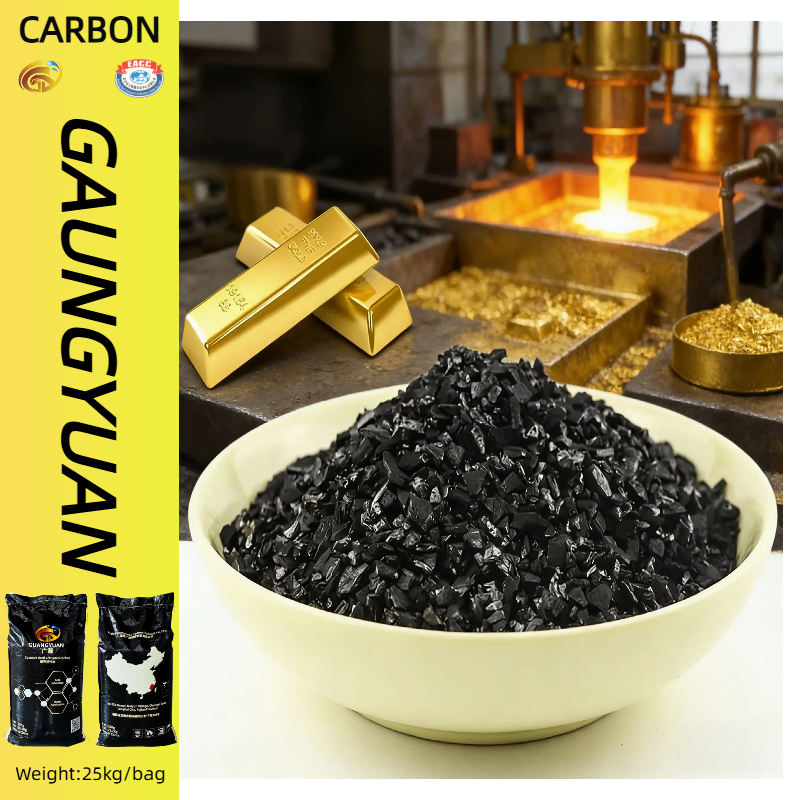
Coconut shell activated carbon is widely used in hydrometallurgical processes for gold mining, especially in carbon-in-pulse (CIP) and carbon-in-leach (CIL) processes, and is currently the most mainstream adsorbent material in the field of gold extraction. Its widespread application is mainly due to its unique physical structure and suitable surface chemical properties.
1. High Mechanical Strength and Excellent Wear Resistance: Coconut shell activated carbon has a hard texture and exhibits excellent wear resistance under high-intensity operating conditions such as slurry mixing, pumping, and thermal regeneration. This not only significantly reduces the carbon loss rate but also minimizes gold entrainment losses due to carbon pulverization, thereby effectively controlling operating costs.
2. Well-developed microporous structure
In the cyanide leaching system, gold exists as an anion [Au(CN)₂]⁻, with a kinetic diameter of approximately 0.5–0.6 nm. Coconut shell activated carbon is predominantly microporous, and its pore size distribution closely matches the size of the gold-cyanide complex, which is beneficial for achieving efficient physical adsorption.
3. High specific surface area: The specific surface area of coconut shell activated carbon can typically reach 1000–1500 m²/g, providing a large number of adsorption sites, which can efficiently enrich gold ions in solution.
4. Good chemical stability. In strongly alkaline, cyanide-containing leaching environments, coconut shell activated carbon exhibits excellent chemical inertness, is not prone to structural damage or side reactions, and ensures long-term stable adsorption performance.
· Fujian Guangyuan Carbon Products Co.,Ltd.