
Coconut shell activated carbon preparation process
Coconut shell activated carbon is made from high-quality coconut shells, primarily sourced from Southeast Asian countries such as Hainan Island in China, Vietnam, Thailand, the Philippines, and Indonesia.
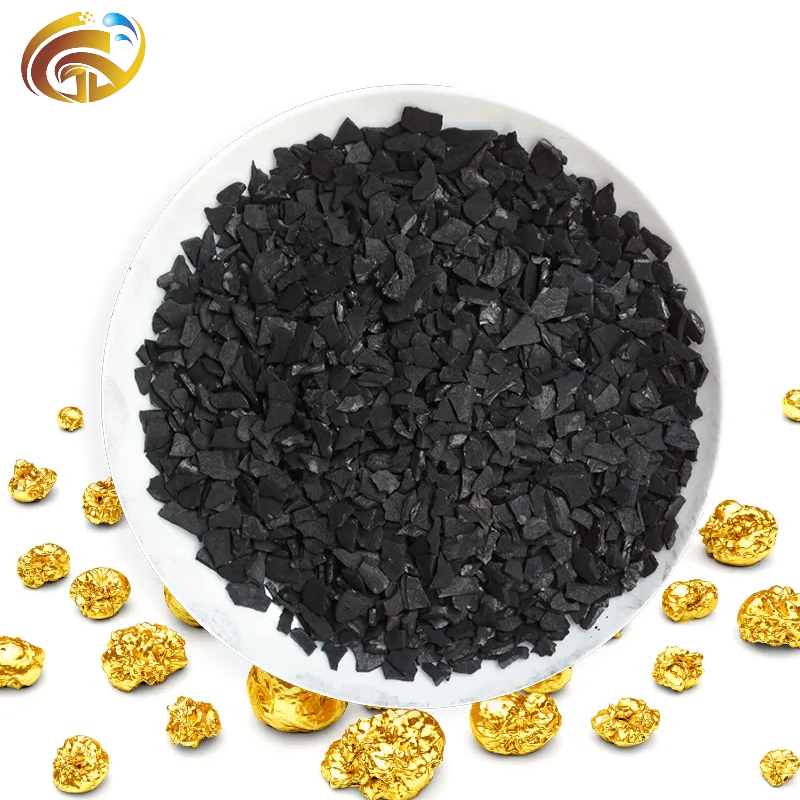
Coconut shell activated carbon is made from coconut shells and refined through carbonization, activation, and superheated steam catalysis. It appears as black, irregular granules with a specific surface area of 1000-1600 m²/g and a micropore volume of about 90%, with a micropore diameter of 10A-40A.
1.Raw material screening for coconut shell activated carbon
The quality of activated carbon depends on the quality of its raw materials. There are two main sources of raw materials for coconut shell activated carbon on the market: Hainan coconut shells and Indonesian coconut shells. Hainan coconut shells are thin and not very dense, while Indonesian coconut shells are thick and have a high density. Comparatively, activated carbon processed from Indonesian coconut shells tends to be of higher quality.
2. Carbonization
The selected coconut shells are placed into a carbonization device, and after being burned at a certain temperature, the charcoal kiln is sealed to allow air to enter. Then, the residual heat is used to continue heating and dry distillation to remove the moisture and wood tar from the coconut shells, thus forming coconut shell charcoal.
3. Activation
The carbonized coconut shell charcoal is placed in an activation furnace, where oxygen-containing gases such as water vapor and flue gas (mainly CO2) act as activators, reacting with the charcoal at high temperatures to undergo an oxidation-reduction reaction. The main operating conditions of the activation process include activation temperature, activation time, activator flow rate and temperature, feeding rate, and oxygen content within the activation furnace.
4. The Mystery of Pore Structure and Surface Area
Through activation treatment, the micropores and mesopores formed in the coconut shell give it excellent adsorption capacity. These tiny channels and pores act like channels for fresh air, leaving no room for harmful gases to escape.
· Fujian Guangyuan Carbon Products Co.,Ltd.